Physical Address
304 North Cardinal St.
Dorchester Center, MA 02124
Physical Address
304 North Cardinal St.
Dorchester Center, MA 02124
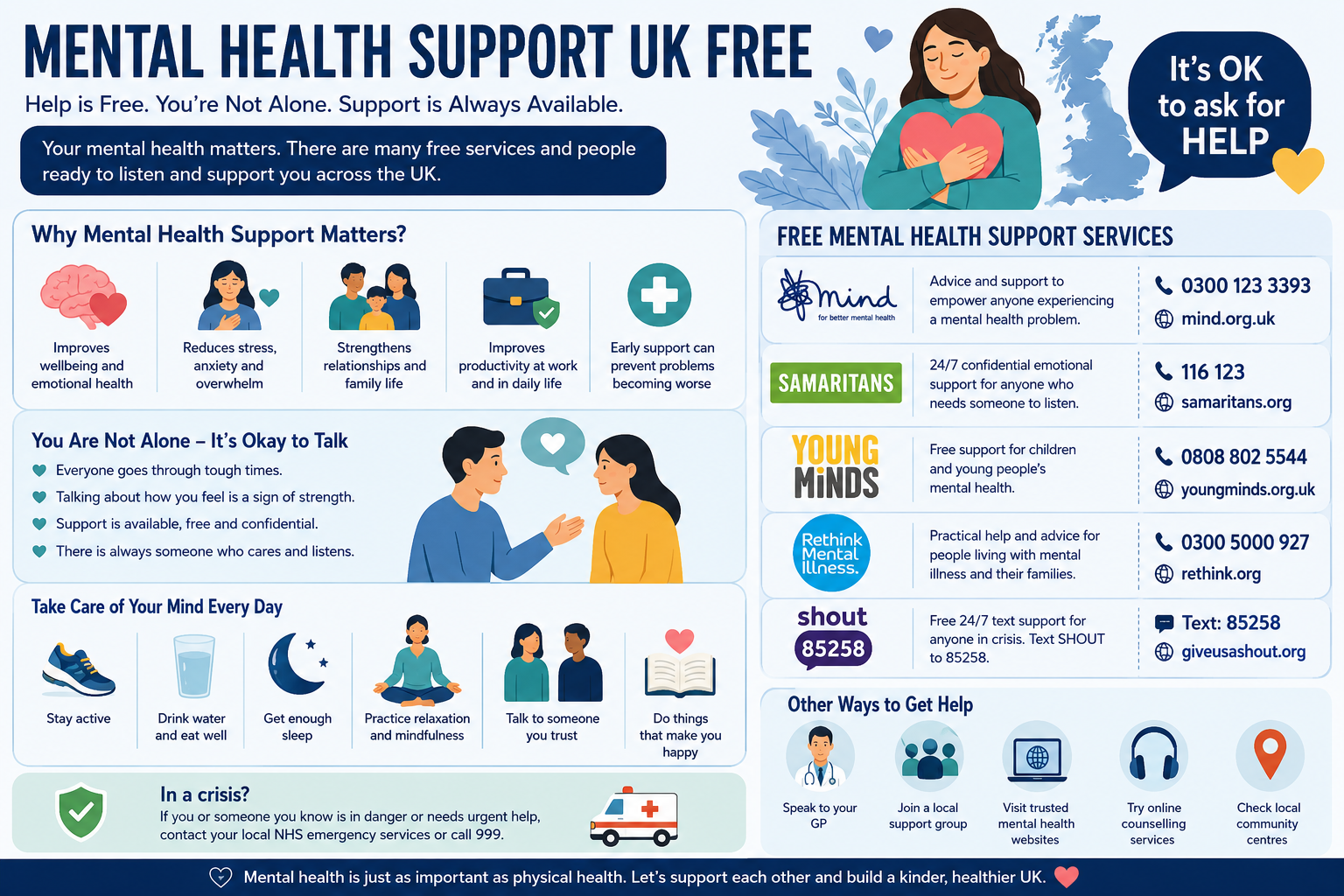
“mental health support uk free” Mental health is an important part of everyday life. In the United Kingdom, many people search for mental health support when they feel stressed, anxious, lonely, or emotionally tired. The good news is that there are many free services available across the UK. These services help children, teenagers, adults, and older people who need emotional care and guidance. Free support can come from charities, community groups, online platforms, NHS services, and telephone helplines. Many people avoid seeking help because they think support costs too much money, but the UK offers several trusted programs that are free for everyone who needs help and emotional stability.
Free mental health services are important because emotional problems can affect anyone regardless of age, income, or background. Stress from school, work, family issues, or financial problems may lead to anxiety or depression. When support is free, more people can access professional guidance without fear of cost. In the UK, charities and healthcare organizations work hard to ensure that nobody feels alone during difficult times. Free services reduce barriers and encourage people to talk openly about mental health. Early support can prevent problems from becoming more serious. This helps individuals improve relationships, sleep better, perform well at work, and enjoy a healthier life overall.
People across the UK experience different types of mental health difficulties every day. Anxiety is one of the most common problems and can cause fear, nervousness, and panic attacks. Depression may lead to sadness, low energy, and loss of interest in activities. Some people struggle with loneliness, especially older adults or students living away from home. Others may face stress because of money problems, family pressure, or job loss. Social media and modern lifestyles also contribute to emotional pressure. Understanding these challenges helps people realize they are not alone. Many free UK services are designed specifically to support these common emotional and psychological struggles.
The National Health Service offers many free mental health services throughout the UK. People can contact their GP if they feel emotionally overwhelmed or mentally exhausted. A doctor may suggest therapy, counseling, or community support programs. NHS talking therapies are available for conditions such as anxiety, stress, and depression. Some services allow self-referral, meaning people do not always need a doctor’s appointment before seeking help. NHS support is designed to provide confidential and professional assistance. Online mental health tools and crisis helplines are also available through the NHS website. These services help millions of people receive emotional care without financial pressure or expensive treatment costs.
Helplines are one of the fastest ways to receive emotional support in difficult moments. In the UK, several organizations offer free and confidential phone support day and night. Trained volunteers listen carefully and provide comfort without judgment. These helplines help people who feel anxious, isolated, or emotionally distressed. Speaking to someone by phone can reduce feelings of loneliness and fear. Many services also offer text messaging and online chat support for people who feel uncomfortable speaking aloud. Helplines are especially useful during emergencies or emotional crises. They remind people that support is always available and that nobody needs to face mental health struggles completely alone.
| Organization | Main Support Offered | Availability |
|---|---|---|
| Mind | Advice, counseling information, emotional support | UK Wide |
| Samaritans | 24/7 emotional listening helpline | UK Wide |
| YoungMinds | Support for children and teenagers | UK Wide |
| Rethink Mental Illness | Guidance and mental illness support | UK Wide |
| Shout | Free crisis text messaging support | UK Wide |
Online mental health support has become very popular in the UK because it is convenient and easy to access. Many organizations provide free mental health information, self-help tools, meditation exercises, and live chat services. People can receive support from home without traveling to a clinic or office. Online therapy resources help users manage stress, improve sleep, and build healthy habits. Young people often prefer online communication because it feels private and comfortable. Video counseling sessions are also becoming more common. These digital services are useful for individuals living in rural areas or those who find face-to-face conversations difficult. Technology has made mental health care more accessible than ever before.
Children and teenagers also need emotional support during difficult times. School pressure, bullying, family issues, and social media can create emotional stress for young people. The UK provides free mental health programs specifically designed for children and teenagers. Schools often work with counselors and youth organizations to support student wellbeing. Online youth helplines and text services allow teenagers to discuss problems safely and privately. Parents and teachers are encouraged to listen carefully and notice signs of emotional distress. Early intervention helps young people build confidence and emotional resilience. Access to free support gives teenagers a safe place to express feelings and ask for guidance when life becomes challenging.
University life can be exciting, but it may also bring stress, homesickness, and academic pressure. Many students in the UK experience anxiety or emotional exhaustion during their studies. Universities often provide free counseling and wellbeing services for enrolled students. These services may include therapy sessions, support groups, mindfulness workshops, and emergency mental health assistance. Student unions also organize activities to reduce loneliness and encourage friendships. Online learning and exam stress can affect emotional wellbeing, making mental health support even more important. Students should never feel embarrassed about asking for help. Universities aim to create safe environments where students can discuss emotional struggles openly and confidently.
Work-related stress affects many people in the UK every year. Long hours, financial concerns, deadlines, and workplace pressure can impact emotional wellbeing. Employers increasingly recognize the importance of supporting staff mental health. Many workplaces now offer free employee assistance programs that include counseling and mental health guidance. Some companies provide wellbeing workshops, stress management sessions, and flexible work options. Healthy work environments encourage open conversations about emotional health and reduce stigma. Employees should feel comfortable discussing stress without fear of judgment. Free workplace support can improve productivity, relationships, and overall happiness. Taking care of mental wellbeing at work benefits both employees and employers in the long term.
Community support groups help people connect with others who understand similar emotional struggles. These groups may focus on anxiety, depression, grief, addiction recovery, or loneliness. Local charities, churches, and community centers often organize free meetings and support sessions. Sharing experiences with others can reduce isolation and provide comfort. Many people feel stronger after hearing stories from individuals facing similar challenges. Support groups create safe and welcoming spaces where participants can talk honestly without fear of criticism. Some meetings are available online, while others happen in person. Community support encourages emotional healing and reminds people that recovery becomes easier when support and understanding are shared together.
Open conversations about mental health help remove fear and misunderstanding. In the past, many people stayed silent because they worried about judgment from others. Today, awareness campaigns encourage honest discussions about emotions and mental wellbeing. Talking openly allows individuals to seek support earlier and avoid deeper emotional struggles. Friends, family members, teachers, and coworkers all play important roles in creating supportive environments. Listening carefully and showing kindness can make a big difference for someone feeling emotionally overwhelmed. Public discussions also help society understand that mental health problems are common and treatable. Encouraging open communication helps build stronger communities where emotional wellbeing is valued and respected.
Recognizing emotional distress early can help people receive support before problems become severe. Common signs include constant sadness, low energy, mood swings, difficulty sleeping, loss of appetite, or avoiding social situations. Some individuals may become angry more often or lose interest in activities they once enjoyed. Others may struggle to focus at school or work. Physical symptoms such as headaches and tiredness can also be linked to emotional stress. Friends and family should pay attention to these warning signs and encourage supportive conversations. Free mental health services are available for people experiencing these symptoms. Seeking help early often leads to faster emotional recovery and improved wellbeing.
Parents and families can also experience emotional stress due to responsibilities, financial worries, and childcare challenges. Free family support services in the UK help parents manage anxiety, stress, and emotional exhaustion. Parenting groups and counseling services provide practical advice and emotional guidance. Family therapy sessions may help improve communication and solve relationship difficulties. Children are often affected when parents feel emotionally overwhelmed, so family wellbeing is very important. Support services encourage healthy communication within households and reduce feelings of isolation. Free parenting helplines also help adults discuss concerns privately. Strong family support systems create healthier emotional environments where both children and adults can thrive together.
Social media has both positive and negative effects on mental health. On one side, it helps people find support groups, awareness campaigns, and inspirational stories. On the other side, excessive social media use may increase stress, comparison, and loneliness. Many young people feel pressure to appear perfect online, which can harm self-esteem. UK mental health organizations encourage healthy digital habits and balanced screen time. Taking breaks from social media may improve emotional wellbeing and sleep quality. Online awareness campaigns also help reduce stigma around mental illness and encourage people to seek support. Understanding the emotional effects of digital life is important for maintaining a healthier mental balance.
Some people experience mental health crises that require urgent support. During moments of panic, severe anxiety, or emotional breakdown, immediate help is extremely important. The UK offers free crisis support through emergency helplines, NHS crisis teams, and text support services. These organizations are trained to help people stay safe and calm during emotional emergencies. Friends and family should never ignore warning signs of severe distress or thoughts of self-harm. Reaching out quickly can save lives and provide hope during difficult situations. Crisis support services are available day and night to ensure nobody faces emotional emergencies without help, guidance, and compassionate human connection during challenging moments.
Counseling and therapy help people understand emotions and develop healthier coping skills. Free therapy services in the UK support individuals dealing with stress, anxiety, depression, grief, and trauma. Speaking with a trained counselor allows people to express feelings in a safe environment. Therapy sessions may teach breathing exercises, stress management techniques, and positive thinking habits. Many individuals feel stronger and more confident after receiving emotional support. Counseling also improves relationships and communication skills. Free therapy programs make professional help accessible for people who cannot afford private treatment. Emotional healing takes time, but therapy provides guidance and support that can improve long-term mental wellbeing and personal growth.
Daily habits can strongly affect emotional wellbeing. Regular exercise helps reduce stress and improve mood because physical activity releases positive chemicals in the brain. Healthy eating, good sleep, and drinking enough water also support mental balance. Spending time outdoors and connecting with friends may reduce loneliness and anxiety. Relaxation activities such as meditation, reading, and listening to music can calm the mind. Limiting alcohol and avoiding harmful substances are also important for emotional stability. Mental health support works best when combined with healthy routines. Small lifestyle improvements often create positive emotional changes and help individuals feel more energetic, balanced, and emotionally stronger over time.
Accessing free mental health support in the UK is easier than many people think. Individuals can begin by speaking with a GP, contacting a charity helpline, or visiting trusted mental health websites. Many organizations provide online forms, text support, and telephone services without complicated processes. Schools, universities, workplaces, and community centers also offer guidance and referrals. Some services allow anonymous communication, helping people feel safer when discussing sensitive issues. Asking for support is a positive and courageous step toward emotional wellbeing. No one should feel ashamed about seeking help. The UK continues working to improve access to mental health care for everyone who needs understanding and support.
Free mental health support in the UK plays a powerful role in improving lives and strengthening communities. Emotional struggles can happen to anyone, but support services ensure people do not face challenges alone. From NHS programs and crisis helplines to online counseling and community groups, many resources are available without cost. These services encourage open conversations, emotional healing, and healthier lifestyles. Seeking help is a sign of strength, not weakness. By increasing awareness and supporting each other, society can create a safer and kinder environment for everyone. Mental wellbeing matters every day, and free support services continue helping millions of people across the United Kingdom live healthier and happier lives.

