Physical Address
304 North Cardinal St.
Dorchester Center, MA 02124
Physical Address
304 North Cardinal St.
Dorchester Center, MA 02124
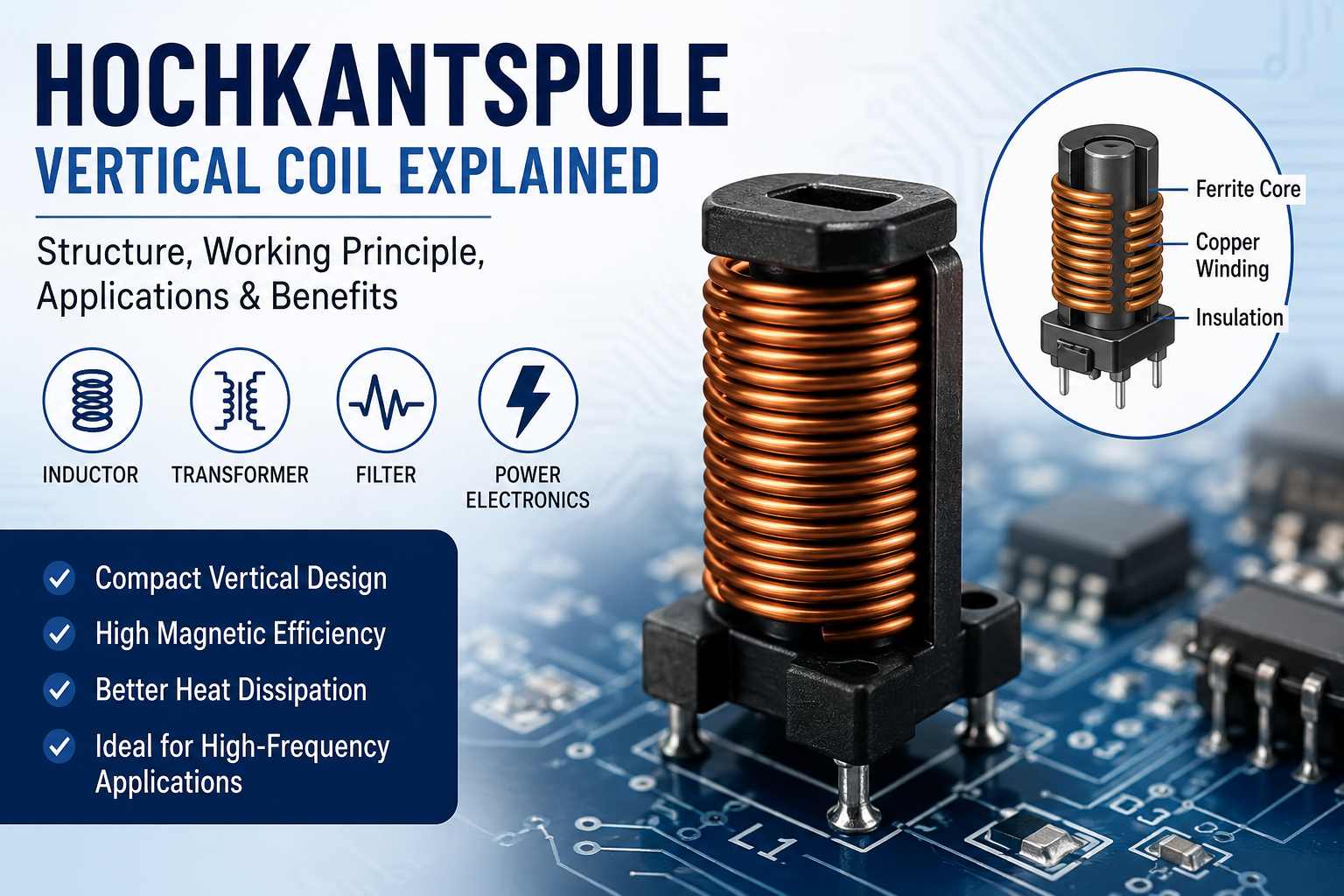
A “Hochkantspule” is a German term used in electrical engineering to describe a vertically oriented coil, commonly found in inductors, transformers, and electromagnetic systems. Unlike flat or horizontally wound coils, the Hochkantspule is wound in an upright position, which allows a more compact footprint in certain devices. This design is especially useful when space optimization and magnetic field direction control are important. The coil works by generating a magnetic field when electric current flows through its windings. Its vertical structure also helps improve heat dissipation and reduces interference in tightly packed electronic assemblies. Engineers often choose this coil type for precision applications in modern electronics.
The structural design of a Hochkantspule focuses on its vertical winding orientation. The wire is wound around a core that is positioned upright, usually made of ferrite or laminated iron materials. This arrangement helps concentrate the magnetic flux efficiently while maintaining stability in compact devices. The geometry also affects inductance values, making it suitable for high-frequency circuits. The insulation layers between windings are carefully controlled to avoid short circuits and energy loss. Designers must balance size, resistance, and magnetic strength when creating these coils. The vertical alignment gives better integration in circuit boards where horizontal space is limited but height is available.
Materials play a crucial role in the performance of a Hochkantspule. The core is often made from ferrite due to its high magnetic permeability and low energy loss at high frequencies. Copper wire is typically used for winding because of its excellent conductivity. In some advanced designs, aluminum wire may also be used to reduce cost. Insulating materials such as enamel coatings, polyester films, or epoxy resins prevent electrical leakage between windings. The combination of these materials ensures durability, efficiency, and stability in operation. Material selection directly influences thermal behavior, resistance levels, and overall electromagnetic performance of the coil system.
The working principle of a Hochkantspule is based on electromagnetic induction. When electric current flows through the coil, it generates a magnetic field around the windings. This magnetic field depends on the number of turns, current strength, and core material. The vertical structure enhances magnetic flux alignment, improving efficiency in energy transfer. When used in inductors or transformers, the coil either stores energy in its magnetic field or transfers it to another circuit. This process is fundamental in power electronics and signal processing systems. The Hochkantspule is especially effective in minimizing energy losses while maintaining strong inductive behavior.
The electromagnetic behavior of a Hochkantspule is influenced by its orientation and winding density. The vertical arrangement allows magnetic flux lines to be more concentrated along the core axis. This improves inductance and reduces unwanted electromagnetic interference. Skin effect and proximity effect also play roles at high frequencies, affecting current distribution in the wire. Engineers must carefully design the coil to reduce these losses. The magnetic field strength is directly proportional to the current and number of turns. This predictable behavior makes Hochkantspulen ideal for precision electronic applications where stable magnetic performance is required.
Hochkantspulen are widely used in modern electronics, especially in power supplies, signal filters, and communication devices. Their compact vertical design allows integration into densely packed circuit boards. They are also found in switching regulators and DC-DC converters where efficient energy transfer is critical. In audio systems, they help filter noise and stabilize signals. Industrial equipment uses them for electromagnetic control and sensing applications. The ability to maintain strong inductance in a small footprint makes them highly valuable in portable devices. As electronics continue to shrink in size, the demand for Hochkantspulen continues to grow significantly.
In transformers, the Hochkantspule plays an important role in energy transfer between circuits. The primary and secondary windings can both be designed in a vertical orientation to improve space efficiency. This design helps reduce leakage inductance and improves coupling between coils. It is particularly useful in high-frequency transformers used in switch-mode power supplies. The vertical structure also aids in thermal management, allowing heat to dissipate more effectively. Engineers choose this design when compact size and high efficiency are required. It ensures stable voltage conversion while maintaining minimal energy loss during operation.
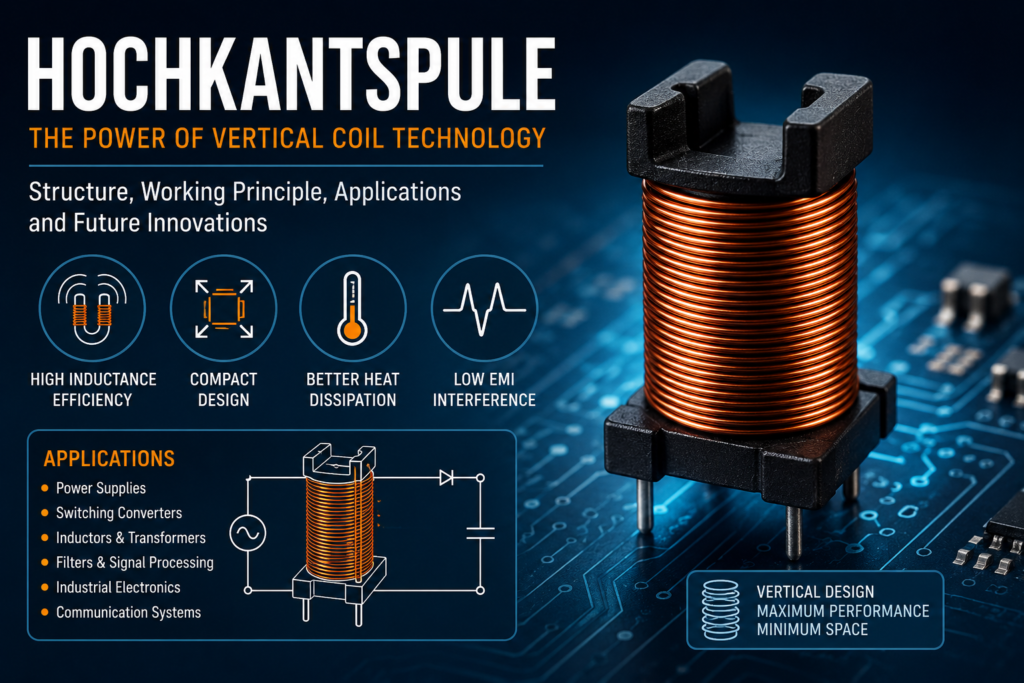
Hochkantspulen are commonly used as inductors in electronic circuits. Their main function is to store energy in a magnetic field and resist changes in current. The vertical winding structure increases inductance while keeping the component size small. This makes them ideal for applications like filters, oscillators, and energy storage circuits. The core material enhances magnetic performance, while the winding density determines inductance levels. These inductors are essential in regulating current flow and smoothing electrical signals. Their predictable behavior and compact design make them a preferred choice in advanced electronic systems.
The manufacturing of a Hochkantspule involves precision winding techniques. First, the core is prepared using ferrite or laminated steel. Then, copper wire is carefully wound in a vertical orientation using automated machines. Each layer is insulated to prevent short circuits. After winding, the coil is coated with protective resin or varnish to enhance durability. Quality control checks ensure correct inductance values and resistance levels. Advanced manufacturing may include robotic assembly for high precision. The entire process requires strict control of tension, spacing, and alignment to ensure optimal performance in final applications.
Different winding techniques are used to optimize Hochkantspulen performance. Layer winding is common, where wires are arranged in neat vertical layers. Random winding may be used in simpler designs but offers less precision. Precision winding ensures uniform spacing, reducing electromagnetic losses. Some advanced methods use bifilar or multifilar winding to improve coupling effects. The choice of technique depends on application requirements such as frequency, power, and efficiency. Proper winding reduces parasitic capacitance and improves inductive behavior. Engineers carefully select the method to achieve the best balance between performance and manufacturing cost.
Insulation is critical in Hochkantspulen to ensure safe and efficient operation. Each wire is coated with enamel insulation to prevent direct electrical contact. Additional layers such as tape, film, or epoxy resin are used between windings. This prevents short circuits and reduces energy loss. High-temperature insulation materials are used in demanding environments. Proper insulation also improves durability and extends coil lifespan. Without effective insulation, the coil could fail due to heat or electrical breakdown. Therefore, insulation design is a key factor in ensuring reliability in electronic and industrial applications.
Like all electromagnetic components, Hochkantspulen experience energy losses. These include copper losses due to resistance in the wire and core losses due to hysteresis and eddy currents. At high frequencies, skin effect increases resistance, leading to additional losses. Engineers minimize these effects by using high-quality materials and optimized designs. Ferrite cores help reduce eddy current losses significantly. Proper winding techniques also reduce proximity effects. Managing these losses is essential for maintaining efficiency in power electronics. The goal is to maximize energy transfer while minimizing wasted heat and power dissipation.
Efficiency in a Hochkantspule depends on multiple factors such as material quality, winding density, and operating frequency. A well-designed coil minimizes resistance and magnetic leakage. High-permeability cores improve energy transfer efficiency. Proper insulation reduces unwanted losses and heat buildup. Cooling methods may also be used in high-power applications to maintain stable performance. Efficiency is especially important in power supplies and communication systems where energy conservation is critical. Engineers continuously optimize design parameters to achieve higher efficiency while maintaining compact size and cost-effectiveness in production.
| Property | Description |
|---|---|
| Core Material | Ferrite or laminated iron |
| Winding Orientation | Vertical (upright structure) |
| Conductor | Copper or aluminum wire |
| Insulation | Enamel, epoxy, polyester |
| Application Range | Electronics, transformers, inductors |
Thermal management is an important aspect of Hochkantspule design. When current flows through the coil, heat is generated due to resistance. The vertical structure helps improve airflow and cooling efficiency. Materials like ferrite also help dissipate heat effectively. In high-power applications, additional cooling systems such as heat sinks or forced air may be used. Excess heat can reduce performance and damage insulation over time. Therefore, maintaining optimal temperature is essential for reliability. Engineers carefully design coils to balance electrical performance with thermal stability.
Compared to horizontal coils, Hochkantspulen offer several advantages in compactness and magnetic efficiency. Vertical orientation allows better use of space in electronic devices. However, horizontal coils may offer easier manufacturing in some cases. Magnetic field distribution also differs, with vertical coils providing more focused flux paths. This improves inductance stability in certain applications. Each design has its own benefits depending on use case. Engineers choose based on space constraints, performance requirements, and cost considerations. The Hochkantspule is often preferred in modern miniaturized electronics.
The main advantages of Hochkantspulen include compact design, high inductance efficiency, and improved thermal performance. Their vertical structure allows better integration into small electronic systems. They also provide strong magnetic field control, making them suitable for precision applications. Reduced electromagnetic interference is another benefit. These coils are highly reliable when properly designed and manufactured. They are also adaptable to different materials and configurations. As technology advances, their importance in electronics continues to increase, especially in portable and high-frequency devices.
Despite their advantages, Hochkantspulen also have some limitations. Manufacturing complexity is higher due to vertical winding requirements. They may also be more expensive than simpler coil designs. At very high frequencies, losses can still occur due to skin and proximity effects. Space savings in height may not always be practical in all device layouts. Additionally, precise insulation is required to avoid failures. These disadvantages must be considered when designing electronic systems. However, in many cases, the benefits outweigh the limitations.
In industrial systems, Hochkantspulen are used in power conversion units, automation systems, and control circuits. They help regulate voltage and current in heavy machinery. Their durability and efficiency make them suitable for demanding environments. They are also used in sensors and measurement devices for electromagnetic detection. Industries prefer them for their reliability and compact size. As automation increases globally, demand for such coils continues to rise. Their role in ensuring stable electrical performance is critical in modern industrial technology.
Future developments in Hochkantspulen focus on improving efficiency, reducing size, and enhancing material performance. Researchers are exploring nanomaterials and advanced ferrites for better magnetic properties. Automated manufacturing is also improving precision and reducing costs. Integration with smart electronics and IoT devices is increasing. These coils may also be used in renewable energy systems for better power management. As electronics evolve, Hochkantspulen will continue to adapt and play a key role in next-generation technologies.
The Hochkantspule represents an important innovation in modern electrical engineering. Its vertical design, efficient magnetic behavior, and compact structure make it highly valuable in many applications. From transformers to inductors, it plays a crucial role in energy transfer and signal processing. Despite some limitations, its advantages in efficiency and space optimization are significant. As technology advances, further improvements in materials and design will continue to enhance its performance. The Hochkantspule remains a fundamental component in the evolution of electronic systems.
A Hochkantspule is a vertically wound electrical coil used in inductors, transformers, and other electronic devices. Its upright structure helps save space and improve magnetic efficiency.
It is commonly used in power supplies, switching converters, filters, communication systems, and industrial electronic equipment where compact design and stable inductance are needed.
The vertical (upright) winding allows better space utilization and helps control the magnetic field direction, improving efficiency in compact electronic circuits.
It typically uses a ferrite or iron core and copper wire for winding, along with insulating materials like enamel, epoxy, or polyester coatings.
Key advantages include compact size, efficient magnetic performance, good heat dissipation, and suitability for high-frequency applications.
Yes, they can be more complex and expensive to manufacture, and they may still experience losses at very high frequencies due to resistance and magnetic effects.
When electric current passes through the coil, it creates a magnetic field. This field is used to store energy, filter signals, or transfer power between circuits.
Yes, it is widely used in modern electronics like smartphones, power adapters, industrial machines, and communication devices due to its efficiency and compact design.

