Physical Address
304 North Cardinal St.
Dorchester Center, MA 02124
Physical Address
304 North Cardinal St.
Dorchester Center, MA 02124
When people see 172.17.1.10.8090, they often think it is a strange website address or a hidden server path. In reality, this type of format is usually connected to a private IP address and a port number used inside networks, development servers, Docker environments, or local applications.
The number may look confusing at first, but understanding it becomes simple once you know how IP addresses and ports work together. This article explains everything about 172.17.1.10.8090, including its structure, practical uses, security concerns, and troubleshooting methods.
The expression 172.17.1.10.8090 is commonly interpreted as:
Normally, the correct technical format would appear like this:
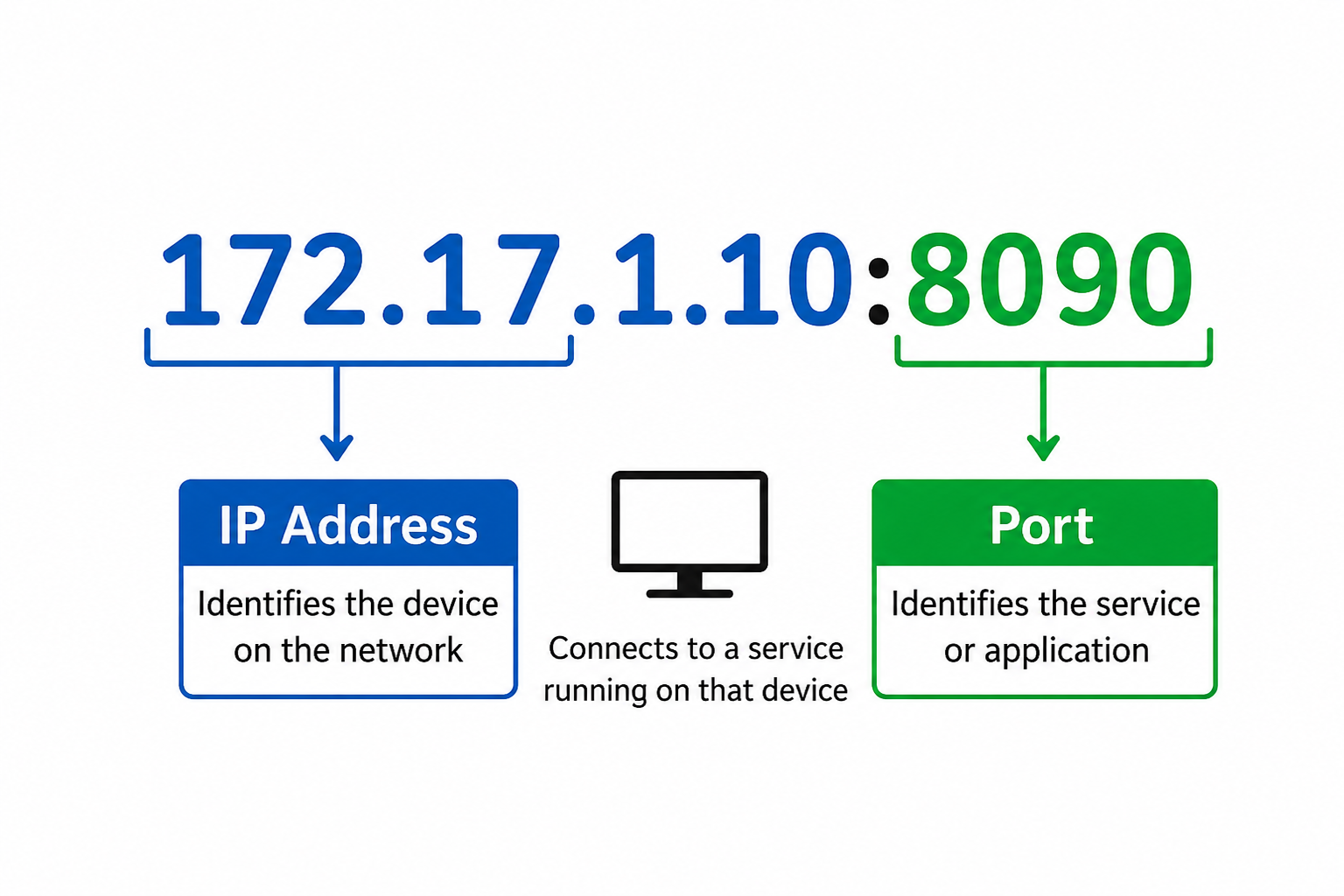
172.17.1.10:8090The colon (:) separates the IP address from the port number. Sometimes users accidentally replace the colon with a dot, creating formats like 172.17.1.10.8090.
An IP address identifies a device on a network, while a port tells the system which application or service should receive the traffic.
The IP address 172.17.1.10 belongs to the private IP address range. Private IPs are used inside local networks and are not directly accessible from the public internet.
The range comes from:
172.16.0.0 – 172.31.255.255This range was reserved for private networking by internet standards organizations.
Private IP addresses help organizations and home networks:
Devices using private IPs usually communicate through routers or gateways before accessing the internet.
A port is like a digital doorway for software applications.
Port 8090 is commonly used for:
Although port 80 is the standard for web traffic, developers often use 8090 as an alternative when another service is already running on port 80.
| Component | Meaning | Purpose |
|---|---|---|
| 172.17.1.10 | Private IP Address | Identifies a device in a local network |
| 8090 | Port Number | Identifies a specific service/application |
| 172.17.1.10:8090 | Full Address | Connects to a service running on that device |
| Private Network | Internal communication | Not directly exposed to the internet |
| Alternative Web Port | Similar to HTTP services | Often used in development |
There are several situations where this address may appear.
Docker commonly uses the 172.17.x.x network range for container communication.
For example:
172.17.1.10:8090could represent:
Docker automatically assigns internal IPs to containers so they can communicate.
Developers often run software locally using non-standard ports.
Examples include:
Instead of:
localhost:3000a developer might access:
172.17.1.10:8090especially inside virtual machines or containers.
Many companies host tools internally using private IPs and custom ports.
These may include:
Since the address is private, it is only accessible within the organization’s network.
Think of a building:
Without the correct port, the request may not reach the right application.
For example:
| Address | Result |
|---|---|
| 172.17.1.10:80 | Default web server |
| 172.17.1.10:22 | SSH service |
| 172.17.1.10:3306 | MySQL database |
| 172.17.1.10:8090 | Custom web app |
Each port serves a different purpose.
Port 8090 is extremely popular among developers and administrators.
Many apps run on 8090 because port 80 may already be occupied.
Examples:
Developers often host APIs locally for testing.
Example:
http://172.17.1.10:8090/apiThis allows frontend and backend systems to communicate during development.
Internal monitoring systems sometimes use port 8090.
These dashboards may display:
Even though private IP addresses are safer than public ones, risks still exist.
If an internal service uses weak credentials, attackers inside the network may gain access.
Sometimes administrators accidentally expose private services to the internet.
This can happen through:
Developers occasionally leave test servers running without authentication.
This creates serious risks if sensitive information is stored.
To keep services safe:
| Security Practice | Benefit |
|---|---|
| Use strong passwords | Prevent unauthorized access |
| Enable firewalls | Block unwanted traffic |
| Limit port exposure | Reduce attack surface |
| Update software regularly | Patch vulnerabilities |
| Use HTTPS when possible | Encrypt communication |
If you are inside the correct network, you can usually access the service by entering:
http://172.17.1.10:8090in a browser.
However, the service must:
If any of these conditions fail, the connection will not work.
Sometimes the address does not load. Here are common reasons.
The application may not be running.
Restart the application or container.
A firewall may block access.
Allow port 8090 in firewall settings.
You may not be connected to the same internal network.
Connect to the correct Wi-Fi, VPN, or local network.
The application may use another port.
Check server configuration files.
netstat -tulnpor
ss -tulnpping 172.17.1.10This checks whether the device is reachable.
telnet 172.17.1.10 8090or
nc -zv 172.17.1.10 8090These commands verify whether the port is open.
Docker users frequently encounter the 172.17.x.x network.
Docker creates a virtual bridge network:
docker0Containers connected to this bridge receive internal IPs.
Example:
| Container Name | Internal IP |
|---|---|
| Web App | 172.17.1.10 |
| Database | 172.17.1.11 |
| Redis Cache | 172.17.1.12 |
This helps containers communicate privately.
Many beginners confuse public and private IP addresses.
Example:
8.8.8.8Example:
172.17.1.10Using ports like 8090 provides flexibility.
A developer may run several apps simultaneously:
| Application | Port |
|---|---|
| Main Website | 80 |
| Backend API | 8080 |
| Admin Panel | 8090 |
| Database Dashboard | 9000 |
This prevents conflicts.
The address itself is not dangerous. However, the service behind it could become risky if poorly secured.
Potential dangers include:
Security depends on how the system is configured.
A developer launches a Spring Boot project:
java -jar app.jarThe application starts on:
172.17.1.10:8090Team members inside the network can access it.
A monitoring dashboard inside Docker uses:
172.17.1.10:8090Administrators view system metrics through the browser.
A company hosts an internal customer management platform accessible only within office networks.
Employees connect through:
172.17.1.10:8090Most applications allow custom ports.
Example configuration:
server.port=8090Changing the port helps avoid conflicts.
Common alternatives:
Not exactly.
It is usually:
Unlike public websites, it is generally inaccessible from outside the network.
Many people search this term because:
The unusual format makes users curious.
Administrators should follow strong management practices.
These steps improve both security and reliability.
Private IPs and custom ports will continue playing a major role in:
As more applications move into isolated environments, addresses like 172.17.1.10:8090 will remain common.
The term 172.17.1.10.8090 may initially look confusing, but it simply represents a combination of a private IP address and a port number. In most cases, the proper format is 172.17.1.10:8090, which points to a service running inside a local or containerized environment.
This address is commonly seen in Docker containers, development servers, internal business applications, and testing systems. While private IP addresses provide an extra layer of isolation, proper security practices are still essential to prevent unauthorized access.
Understanding how IP addresses and ports work together helps developers, IT administrators, and beginners troubleshoot issues more effectively and build safer networking environments.
It usually refers to the private IP address 172.17.1.10 combined with port 8090.
It is a private IP address used inside local networks.
Port 8090 is popular for development servers, dashboards, APIs, and Java applications.
Normally no, unless the network administrator exposes it publicly.
Very often, yes. Docker commonly uses the 172.17.x.x IP range for internal container networking.

